Concrete problems are usually symptoms of water, movement or wear. We find the cause first, then repair what can be repaired: sealing joints, patching chips and spalls, lifting sunken panels and grinding down trip edges. If replacement is the better value, we’ll tell you up front.
Which repair fits depends on why the concrete failed. We find the cause on site, then show you the options, including when replacing a section is the better buy.
Crack and joint sealing
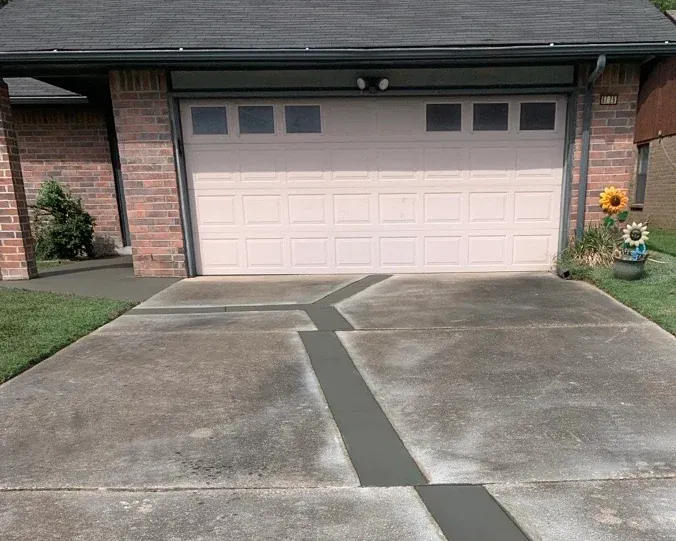
Old joint sealant cracks and pulls away in sun and heat and lets water and debris into the joint. We remove it, clean the joint, add backer rod where it’s needed and install a flexible sealant made for concrete that moves.
Photo: Sam The Concrete Man
Patching and filling
Chips, spalls, pop-outs and pits are cut back to sound concrete, cleaned and filled with a repair material that bonds and cures hard, then finished to blend in. Weathered concrete won’t match a new patch exactly in color, but the texture can.
Leveling
A sunken panel that is still in one piece can be raised: small holes are drilled and a lifting material, foam or a cement slurry, is injected to fill the voids and lift it back into place. A badly broken slab is replaced instead.
Trip-edge grinding
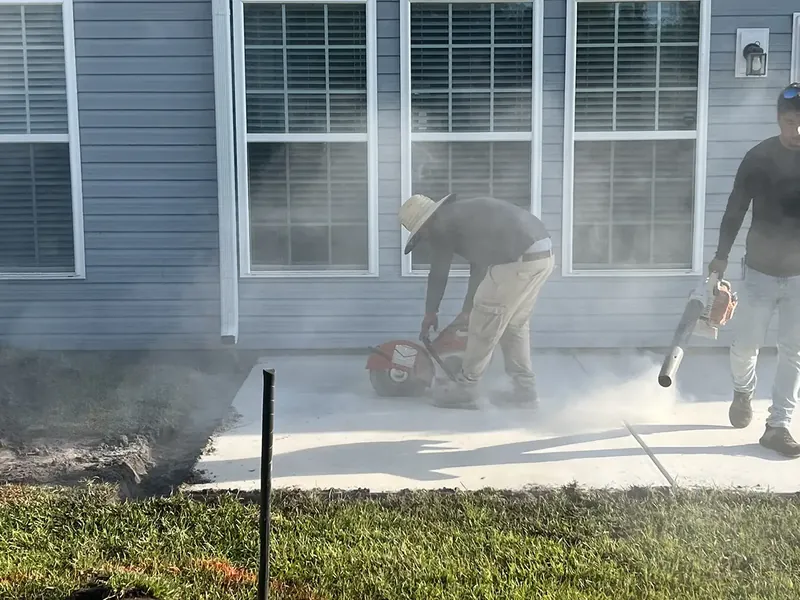
Small offsets between panels are ground down smooth. A bigger offset usually means the panel is still moving, and that calls for leveling or replacement.
Photo: Sam The Concrete Man
Panel replacement
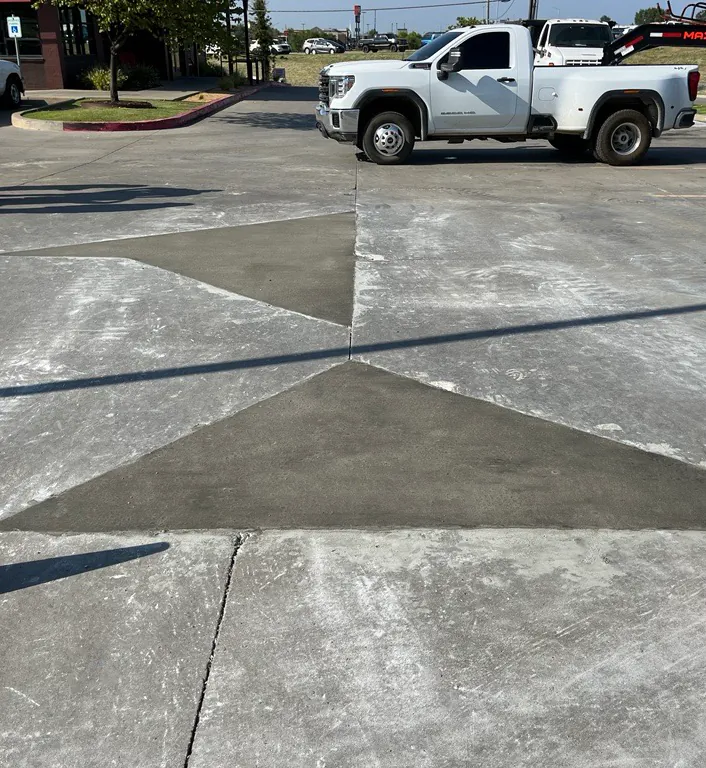
When only some panels have failed, those are cut out and replaced, and whatever is wrong underneath, drainage or base, is fixed so the new concrete doesn’t repeat the old failure.
Photo: Sam The Concrete Man, another location
Resurfacing and overlays
A thin topping over a sound, stable slab renews a worn patio, walk or pool deck with new texture and color: microtoppings, stamped overlays and spray textures. A slab that is moving or sinking needs repair or replacement first.
What we build
Concrete Repairs, start to finish
Crack and joint sealing
Patching and filling chips, spalls and pits
Leveling sunken slabs
Grinding down trip edges
Replacing the worst panels
Resurfacing and overlays
Key considerations
What goes into it
01What caused the damage
02Whether the base is still sound
03A flexible sealant for joints that move
04Texture matched to the old surface
05Honest repair-or-replace advice
Good concrete starts long before the truck arrives. Our experienced team knows what to look for, what questions to ask, and which details can make the difference years down the road.
Built for the Valley
What Phoenix asks of a repair
Why Valley concrete cracks
Heat movement, water sitting on caliche, wash soil that settles and clay that swells after a monsoon storm are the usual causes. A repair that ignores the cause comes back, so the cause is the first thing we look for.
Sealant in full sun
Joint sealant lives in full sun here. Give it a look once a year and replace it when it cracks or pulls away, before water gets under the slab.
What's under the surface
Built for Valley ground: a driveway in cross-section
Not to scale · slope exaggerated
1Water is what moves desert ground: it sits on caliche and softens the soil above, swells clay and settles loose fill.
2Soft soil and high caliche come out and compacted aggregate base goes in, so the slab sits on something that stays put.
3Rebar on chairs at mid-depth keeps any cracks that do form tight and level.
4Control joints, no more than 10 feet apart on a 4-inch slab, decide where it cracks as it shrinks and moves with the heat.
5The slab slopes away from the house, with an isolation joint where it meets the foundation.
How it runs
Estimate to final walkthrough
1Free on-site look at the damage and its cause
2Written quote: repair, partial or full replacement
3Prep: cleaning and cutting back loose material
4Repair, cure time and final walkthrough
Where you live changes the job
A repair on caliche is a different job than one on wash sand
The Valley has four kinds of ground, and each one changes how we prepare the base, reinforce the slab and handle water. Your community page has the specifics.
Caliche desert floor
Dig to firm ground, break out caliche that sits high in the base and haul it off the site, bring in aggregate base compacted in lifts, and slope the slab and the grade so roof and sprinkler water run away from it and off the hardpan.
Compaction done in lifts at the right moisture, with loose or soft soil dug out and replaced, a thicker section anywhere a truck, trailer or RV will park, and grading that keeps runoff off the slab and out from under it. Washes and drainage easements stay open.
Remove the soft and organic soil, bring in compacted aggregate base, set rebar on chairs, and keep the moisture under the slab steady: drainage away from it, and turf and drip lines held back from its edges.
Excavation into the rock or hardpan, a thicker compacted base where the support is uneven, drainage that catches runoff above the slab and carries it around, and engineered retaining walls where the grade is cut. Walls on hillside lots often need a permit, and each city and town has its own rules, so we check yours.
Sam The Concrete Man North Phoenix repairs and replaces cracked driveways across North Phoenix, where many slabs from the 1970s and 1980s sit on caliche that holds sprinkler and roof water under them. Hairline cracks get cleaned and sealed, a panel that sank in one piece can be leveled, and broken panels are cut out to the nearest joints and poured again on a fresh compacted base. We look at the base and the drainage at the free estimate and tell you which fix the slab needs.
Sealing hairline cracks is often a $200–$600 job, leveling a sunken panel by mudjacking runs about $4–$6 per square foot, and resurfacing a sound slab with an overlay about $4–$8 per square foot. Repair only makes sense while the base is still sound, and we tell you at the estimate whether it is.
Hairline cracks can be cleaned out and sealed to keep water from getting under the slab. A crack that keeps widening, or has one side higher than the other, means the ground under it is moving, and sealing alone won’t hold. That calls for finding the cause, then leveling or replacing the panel.
Mudjacking is one way to level a slab: a cement-based slurry is pumped under it through drilled holes. Foam leveling does the same job with a lightweight expanding foam through smaller holes. Either one only works on a panel that sank in one piece and is still sound, and we recommend the method that suits your site.
Sealing keeps water out of the crack, which helps, but a crack that keeps opening usually means the ground under it is still moving. We look for the cause first: water from a downspout or sprinkler, soil that settled, or clay that swells. If the slab has dropped or tipped, replacing that section on a new base is the repair that lasts.
Often, yes. A small trip edge between two sound panels can be ground flush. If the edge is tall or the panel keeps rising, the ground under it is moving, and replacing that panel on a new base is the fix that lasts.
Yes. Open joints are cleaned out and filled with a flexible joint sealant, which keeps weeds out and stops water from running under the slab. If the panels on either side have dropped, we look at the base too.
If the slab underneath is sound and level, usually yes. Pits are patched and the surface gets an overlay or a coating. If the slab has sunk or cracked through, a new surface cracks along the same lines, so replacing it is the better choice.
Yes. Chipped corners and edges can be patched and shaped to match the step. If a step has cracked through or pulled away from the house, the base has moved, and rebuilding that step is the repair that holds.
Not exactly. New concrete starts darker and lightens over months, and old concrete has years of sun and stains. Cutting repairs out to existing joints keeps the lines clean, and a coating over the whole surface can tie old and new together.
We also do footers, home foundations, piers, demolition and removal, grinding and cutting, culverts, curbing, ramps, masonry, overlays, screen enclosures, commercial pads and slabs, commercial patios, commercial walkways and entryways, industrial flooring, loading docks, parking lots. See every service →
Get a clear price on your repair.
You'll know, without question, what your project involves, what it costs, and what to expect before work begins.