Decorative & Stamped Concrete in North Phoenix, AZ
Decorative Concrete
Stamped, colored, stained or exposed: concrete that looks custom.
A finish changes how concrete looks, how it grips and how it holds up in the sun. We pour and finish decorative concrete on new slabs, add color and coatings to sound existing ones, and seal it so the color lasts. Most of the finishes below work on driveways, walkways, patios and pool decks; epoxy is for garages and covered slabs.
Each finish below is on Sam The Concrete Man’s North Phoenix menu. We bring samples to the estimate and tell you which ones suit your slab, your traffic and your sun.
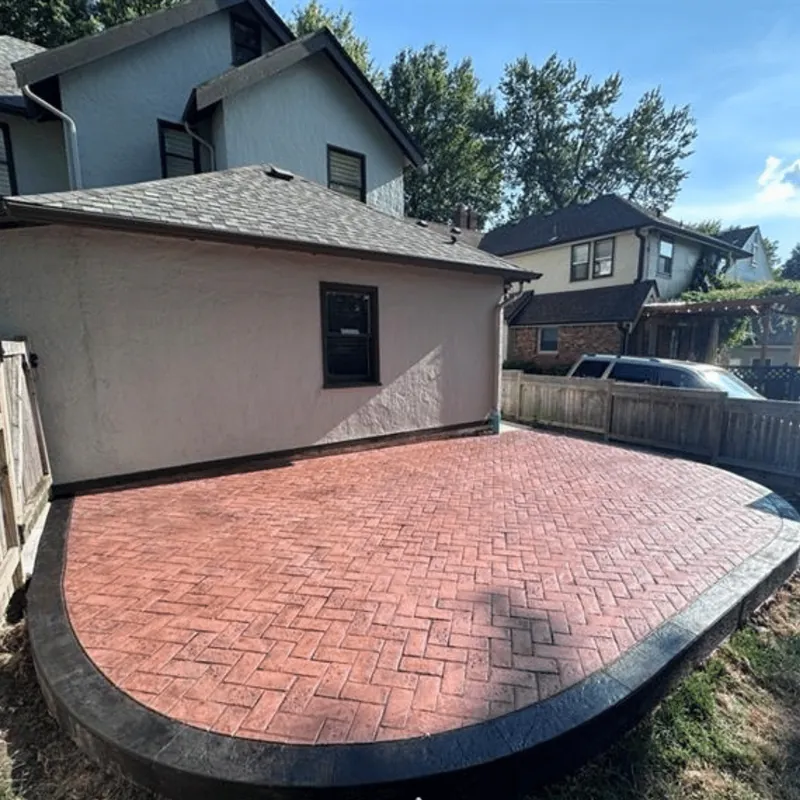
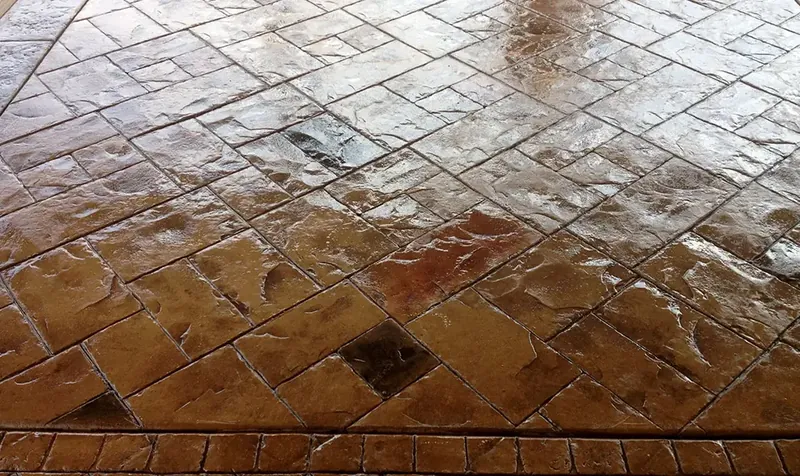
Stamped concrete
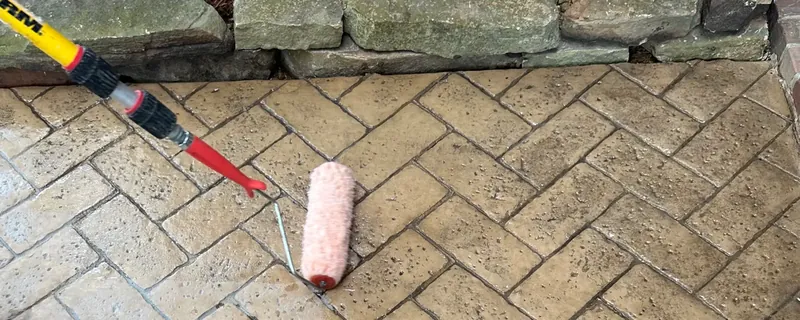
While the concrete is still workable, color goes on and pattern mats are pressed in, so one solid slab looks like flagstone, slate, brick or wood plank. There are no joints between pavers for weeds to grow through or pieces to shift, and resealing keeps the color and the texture crisp.
Photo: Sam The Concrete Man
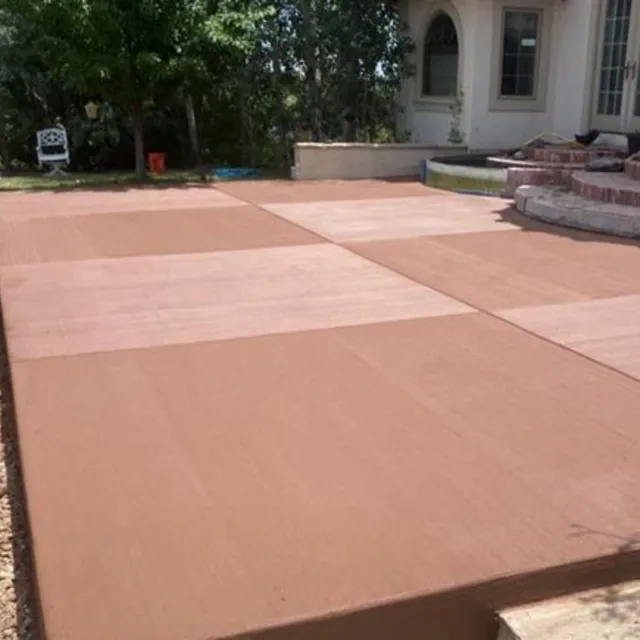
Integral color
Pigment mixed through the concrete, so the color runs all the way through and a chip doesn’t show grey. Iron-oxide pigments don’t fade in the sun, which makes integral color a good fit for desert patios and walks. A release color can add a darker tone in the texture of stamped work.
Photo: Sam The Concrete Man
Concrete staining
A stain soaks into new or existing concrete and becomes part of the surface, so it won’t chip or peel like paint. Water-based stains hold up outdoors but need resealing; it’s a way to give a sound, tired slab new color without replacing it.
Photo: Sam The Concrete Man
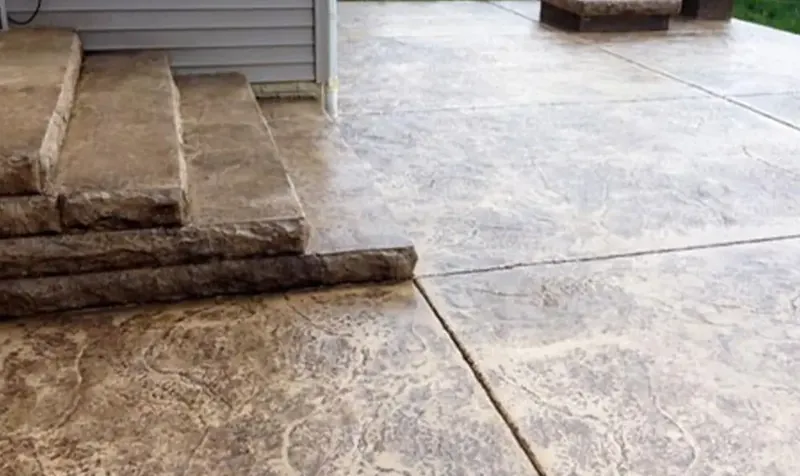
Acid coloring
An acid stain reacts with the minerals in cured concrete and leaves a marbled, variegated color that is different on every slab. The color is permanent; the sealer over it is the wear layer and gets renewed.
Photo: Sam The Concrete Man
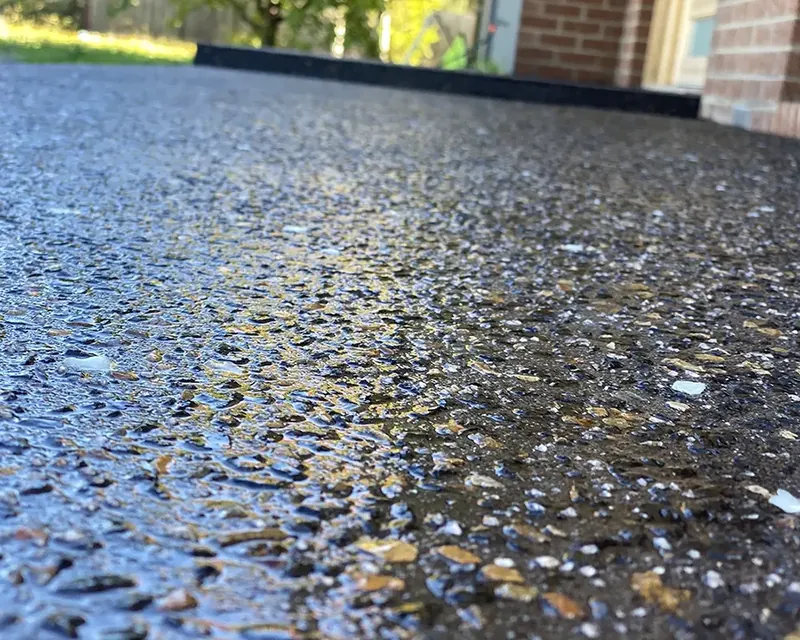
Exposed aggregate
The top layer of cement paste is washed away to show the stone in the mix. The stone gives grip around pools and sprinklers and hides dust and wear between washes.
Photo: Sam The Concrete Man
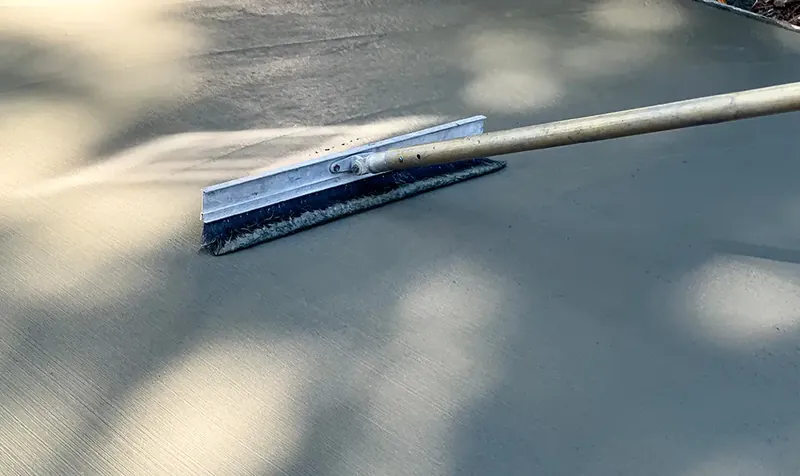
Broom finish
A stiff broom pulled across the fresh surface leaves fine grooves that give shoes and tires grip and channel water off. It is the everyday finish for driveways, walks and steps, and one of the most budget-friendly.
Photo: Sam The Concrete Man
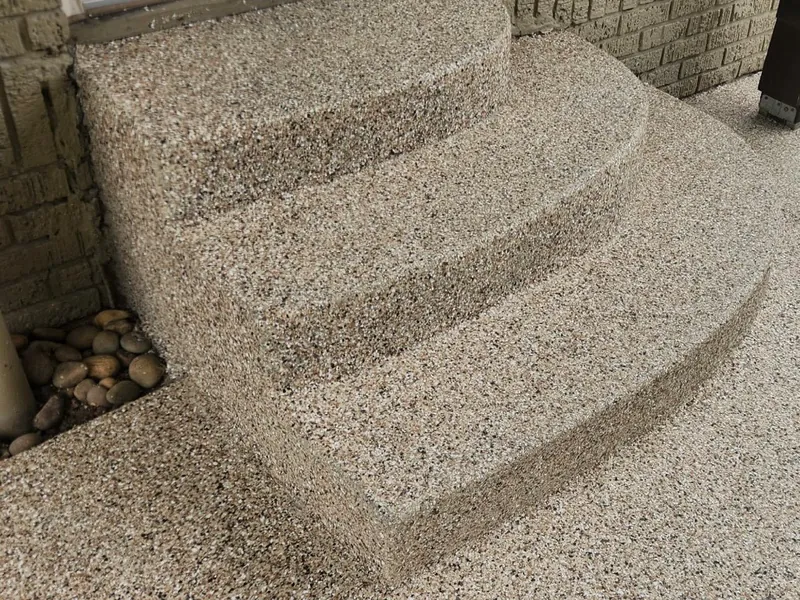
Epoxy coatings
A two-part resin coating bonded to a prepared slab, for garages, workshops and covered areas. It resists oil, stains and moisture, cleans with a mop, and can carry color flakes and a non-slip additive. For a slab in strong sun, we may recommend a different finish or a UV-stable topcoat.
Photo: Sam The Concrete Man, another location
Power wash and seal
A deep clean that lifts dirt, oil and grime, then a sealer that repels water and stains and slows sun fade. It suits a driveway, patio or pool deck that looks dull or dirty but is still structurally sound.
Photo: Sam The Concrete Man
What we build
Decorative Concrete, start to finish
Stamped patterns: flagstone, slate, ashlar, brick and wood plank
Integral color and release colors
Concrete staining and acid coloring
Exposed aggregate
Epoxy and flake coatings
Power washing and sealing
Key considerations
What goes into it
01A finish that suits the traffic and the sun
02Color that won’t fade outdoors
03Texture with grip around water
04Colored sections poured under the same conditions so they match
05A sealer matched to the finish
Good concrete starts long before the truck arrives. Our experienced team knows what to look for, what questions to ask, and which details can make the difference years down the road.
Built for the Valley
What Phoenix asks of a decorative finish
Sun and color
Iron-oxide pigment mixed into the concrete doesn’t fade from sun exposure, and acid-stain color holds as long as the surface stays sealed. Some powdered dyes aren’t UV stable at all, so they are for indoor floors only.
Heat and matching color
Hot weather changes how fast concrete sets, and that can change its shade. Colored sections are poured under the same conditions and with the same mix, so one matches the next.
Resealing
Sealer is the wear layer on decorative concrete. Outdoors under the desert sun, plan on resealing every two to three years, sooner on a pool deck or a driveway in full sun.
What's under the surface
Built for Valley ground: a driveway in cross-section
Not to scale · slope exaggerated
1Water is what moves desert ground: it sits on caliche and softens the soil above, swells clay and settles loose fill.
2Soft soil and high caliche come out and compacted aggregate base goes in, so the slab sits on something that stays put.
3Rebar on chairs at mid-depth keeps any cracks that do form tight and level.
4Control joints, no more than 10 feet apart on a 4-inch slab, decide where it cracks as it shrinks and moves with the heat.
5The slab slopes away from the house, with an isolation joint where it meets the foundation.
How it runs
Estimate to final walkthrough
1On-site visit: samples, patterns and colors
2Written quote with each finish priced
3Base, forms and the pour, or prep of the existing slab
4Finish, color, seal and final walkthrough
Where you live changes the job
A decorative finish on caliche is a different job than one on wash sand
The Valley has four kinds of ground, and each one changes how we prepare the base, reinforce the slab and handle water. Your community page has the specifics.
Caliche desert floor
Dig to firm ground, break out caliche that sits high in the base and haul it off the site, bring in aggregate base compacted in lifts, and slope the slab and the grade so roof and sprinkler water run away from it and off the hardpan.
Compaction done in lifts at the right moisture, with loose or soft soil dug out and replaced, a thicker section anywhere a truck, trailer or RV will park, and grading that keeps runoff off the slab and out from under it. Washes and drainage easements stay open.
Remove the soft and organic soil, bring in compacted aggregate base, set rebar on chairs, and keep the moisture under the slab steady: drainage away from it, and turf and drip lines held back from its edges.
Excavation into the rock or hardpan, a thicker compacted base where the support is uneven, drainage that catches runoff above the slab and carries it around, and engineered retaining walls where the grade is cut. Walls on hillside lots often need a permit, and each city and town has its own rules, so we check yours.
Stamped and colored concrete usually runs $12–$18 per square foot installed, and $18–$25 or more for multi-color patterns and borders. Integral color adds about $1.50–$3 per square foot and exposed aggregate about $2–$4 over plain concrete. A stamped border around a broom-finished slab is a common way to get the look for less. Staining, acid coloring and epoxy coatings are priced on site.
Professional cleaning and sealing usually runs $1.25–$2.50 per square foot. Under the desert sun, resealing every two to three years is the cheapest protection colored and decorative concrete can get against fading and wear.
Integral color is mixed into the concrete before it is poured, so the color runs all the way through and a chip doesn’t show grey; it is for new slabs. A stain goes on cured concrete, new or old, and gives more variation, from the marbled look of acid stain to the even tones of water-based stains. Both hold up outdoors when the sealer over them is kept up.
Concrete can only be stamped while it is fresh, but a sound existing slab can get a stamped overlay, a stain or acid color, or a coating. If the slab has sunk or cracked through, it needs repair or replacement first, or the new surface cracks with it.
It can be if the pattern is smooth and the sealer is glossy. A textured pattern, a thin coat of sealer and a slip-resistant grit mixed into it keep stamped concrete safe around pools, steps and sprinklers. We recommend the right combination at the estimate.
Dark colors look rich and get hot in full sun. For areas you walk on barefoot, we usually suggest a lighter integral color or a textured finish, and saving the darker tones for a border or a shaded spot. We bring color samples to talk through at the estimate.
Exposed aggregate shows the stone in the mix at the surface, which gives a natural texture with good grip underfoot. Stamped concrete has a pattern pressed into the top to look like stone, brick or tile. Both need sealing, and under the desert sun that means every two to three years.
Usually, yes. A chalky look is often worn-out sealer, so we clean the surface and reseal it, which brings back much of the color. Where the color itself has worn, a stain or a coating can renew it, as long as the slab is sound.
We place control joints along lines in the pattern wherever we can, so they blend in. Under that, a compacted base and rebar on chairs keep the slab from moving and hold any crack tight. A crack across a stamped pattern does show, which is why we plan the joints before the pour.
Yes. A stamped or colored border around a broom-finished center is one of the most common decorative jobs we do. It gives you the look at the edges, where it shows most, and keeps the larger field simple to care for.
We also do footers, home foundations, piers, demolition and removal, grinding and cutting, culverts, curbing, ramps, masonry, overlays, screen enclosures, commercial pads and slabs, commercial patios, commercial walkways and entryways, industrial flooring, loading docks, parking lots. See every service →
Get a clear price on your decorative finish.
You'll know, without question, what your project involves, what it costs, and what to expect before work begins.